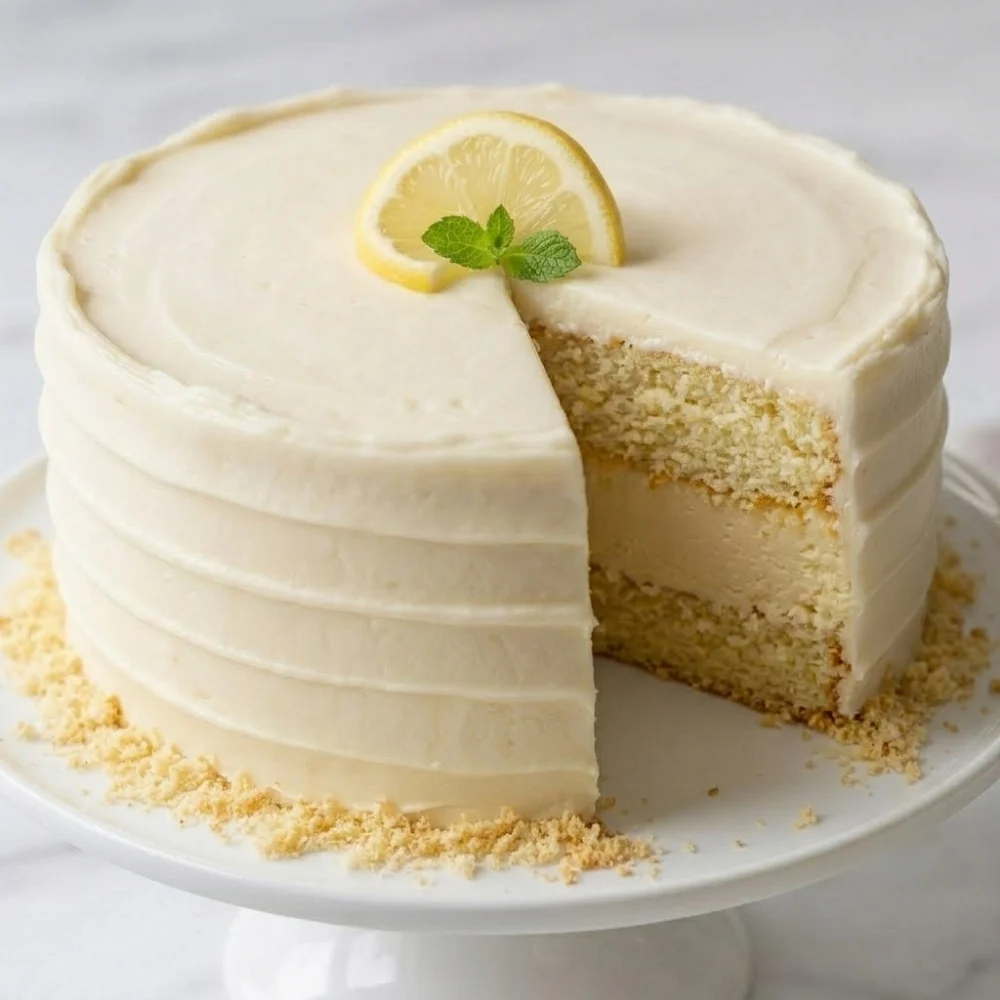
Moist Lemon Pound Cake Recipe With Sour Cream50 mins
Learn how to bake a dense, melt-in-your-mouth citrus loaf using precise pasture science. This simple method balances real lemon juice with rich dairy lipids to secure lasting moisture in every single slice.

Baking a dense, presentation-ready loaf from scratch requires a close look at ingredient weights, fat saturation, and structural aeration. This detailed lemon pound cake recipe provides a step-by-step roadmap for balancing bright fruit flavors with substantial dairy structures. By following a clear mixing order and ensuring accurate temperature management, you can easily avoid the oily bases or dry, chalky crumbs common in many home-baked quick breads.
This traditional formula is scaled to fit comfortably inside a standard metal loaf pan, yielding 8 generous slices designed to stay incredibly moist and fragrant for days. There is no need for unnatural artificial flavorings or processing shortcuts; instead, we rely on the mechanical friction of fresh sugar and zest, combined with proper lipid creaming, to achieve a uniform rise and a deep, golden crust.
The Structural Science of Acid and Lipid Emulsions
The primary technical hurdle encountered during a scratch-made lemon pound cake recipe is preventing liquid separation when introducing highly acidic lemon juice into a high-fat batter base. Raw citrus liquid carries active acids that can quickly curdle raw egg whites and cause creamed butter fats to release their bound water content. If a cake batter enters the hot oven in a broken or curdled state, the melting fats will sink to the bottom, creating a tough, greasy rubber ring beneath a dry, overly crumbly top layer.
To safely insulate the batter from structural collapse, this lemon pound cake recipe introduces full-fat sour cream to act as a physical lipid buffer. The complex milk fats and natural lactic proteins in sour cream encapsulate the liquid citrus elements, keeping them from reacting aggressively with the raw egg whites. This method of structural fat insulation is key across many styles of high-density baking. For a detailed example of how custom water activity and dense ingredients keep baked goods soft without structural spreading, you can analyze our specialized chewy date cookies recipe.
Beyond structural buffering, checking that all fluid ingredients rest comfortably at room temperature prior to mixing is a critical rule for this lemon pound cake recipe. Cold ingredients will shock the warm butter molecules, turning the whipped lipids into hard pellets that destroy the soft, smooth emulsion. This attention to thermal alignment is mandatory for all multi-layered sugar and fat mixtures. To see how temperature coordination ensures two separate flavor profiles stay perfectly smooth and balanced inside a single bake, look over our chocolate and vanilla cookies recipe.
Mechanical Flavor Extraction Through Sugar Friction
Tossing liquid citrus extracts or wet zest carelessly into a finished cake batter will never produce the complex aromatic depth required for an authentic lemon pound cake recipe. The outer skin of the citrus fruit features minuscule glands packed with volatile essential oils. Because these pure botanical oils are naturally hydrophobic, they actively resist blending into water-heavy elements like liquid egg whites or sour cream if added late in the mixing process.
The technical fix is to utilize mechanical sugar friction before any wet items are added. By rubbing the fresh citrus zest directly into coarse granulated sugar grains for two minutes with your fingertips, you crush those tiny oil glands open. The dry sucrose crystals absorb the fresh citrus oils instantly. This step ensures that the signature citrus flavor of this lemon pound cake recipe is bound completely into the structural sweetener, preventing the bright flavor notes from boiling off during the baking phase.
Starch Architecture and Advanced Moisture Control
Traditional loaves are recognized by their dense, close grain, but preventing that weight from turning dry requires managing your flour proteins. For this lemon pound cake recipe, unbleached all-purpose flour provides the best architectural foundation, offering enough structural protein to support a tall rise while keeping the crumb delicate and velvety.
The sour cream introduces natural lactic acid that weakens tough wheat gluten strands, while its rich milk solids lock moisture deep inside the cell walls of the cake. For bakers interested in exploring how alternative whole fruit fibers and natural moisture retain structural softness under intense heat, our double chocolate banana muffins showcase how natural starches maintain an ultra-moist interior crumb without collapsing.
Likewise, understanding how cold temperatures firm up high-fat dairy bases can provide a huge advantage in your broader dessert skills. If you want to see how rich dairy lipids can build an exceptionally smooth structure without any oven heat at all, check out our step-by-step biscoff cheesecake recipe to observe how temperature-controlled fat crystallization sets up perfect, clean slices.
The Technical Step-by-Step Breakdown
- Step 1Citrus Processing and Lipid Aeration
Preheat your home oven to 350°F (175°C) and place your baking rack directly in the middle slot. Line an 8×4-inch metal loaf pan with parchment paper, leaving an inch of paper extending over the long sides to use as handles later. Rub your fresh lemon zest into the granulated sugar until the mixture looks damp and smells aromatic. Add your softened unsalted butter and cream on medium-high speed for 5 minutes. The mixture must become pale white and fluffy, building the essential air base for your lemon pound cake recipe.
- Step 2Securing the Egg Protein Base
Introduce your room-temperature eggs one by one to the creamed butter. Beat for 30 seconds after each egg disappears, allowing the natural lecithin in the yolks to coat the fats before adding the next egg. Slow the mixer and pour in your fresh lemon juice. If the mixture appears slightly split or curdled at this exact moment, don’t worry—the structural dry starches added in the next step will pull the emulsion back into a smooth, thick batter.
- Step 3The Alternating Flour Integration
Whisk your all-purpose flour, baking powder, and salt together in a separate bowl. Lower your mixer to its slowest speed. Alternately add the dry flour mixture and the room-temperature sour cream to your wet base in three separate stages, starting and ending with the flour. Mix only until the last dry white patches vanish. This short window prevents over-activating the flour gluten, ensuring your lemon pound cake recipe finishes with a tender crumb instead of a tough, bread-like structure.
Scrape the thick batter into your lined pan and smooth the top with an offset spatula. Bake at 350°F (175°C) for 30 to 35 minutes. A thin wooden skewer inserted into the center of the loaf should come out completely clean or with just a few tiny, moist crumbs attached.
Managing the heat inside your oven is what elevates a basic home bake into an exceptional lemon pound cake recipe. When a well-stabilized batter is exposed to steady, accurate heat, the leavening gases expand smoothly, lifting the starches at an even rate. If you want to study how structured fat emulsions perform in cold dessert setups, our comprehensive biscoff cheesecake recipe offers a unique look at how alternative setting methods build strong, sliceable structures.
- Step 4Glaze Setting and Professional Slicing
Remove the loaf from the oven and let it cool inside its hot pan for 10 minutes to allow the delicate starches to firm up. Use the parchment paper wings to lift the cake out smoothly and set it onto a wire cooling rack to reach room temperature. Whisk your sifted powdered sugar and fresh lemon juice together until it forms a thick, glossy glaze. Pour the glaze over the completely cooled lemon pound cake recipe loaf, allowing it to coat the top surface cleanly before slicing.
Troubleshooting Loaf Defects and Crumb Integrity
A sunken center usually points to over-aerating the batter during the final stages or opening the oven door too early in the baking process. When you over-mix the batter after the flour is added, you trap excess air that expands too quickly and pops before the starch walls have set enough to support their own weight. Keep the oven door closed for the first 25 minutes of baking to protect this delicate rising phase.
This happens when your oven runs too hot, causing the outer sugars to caramelize and harden long before the center can bake through. Always use an internal oven thermometer to verify your temperature settings, and ensure you do not use low-fat sour cream, as this lemon pound cake recipe requires those specific milk lipids to keep the interior crumb tender and moist.
Serving Protocols and Pristine Slicing Methods
To serve this lemon pound cake recipe beautifully, always allow the loaf to cool completely to room temperature before slicing. Cutting into a warm pound cake breaks the fragile, warm starch bonds, causing the internal crumb to tear and clump under your knife into a heavy, gummy mass.
For clean, presentation-ready slices, use a long serrated bread knife. Wipe the metal blade clean with a warm, damp cloth between every single cut to prevent the thick lemon glaze from smudging down into the clean face of the golden crumb. Serve a thick slice alongside black tea or a warm espresso; the natural bitterness of a dark roast contrasts beautifully with the sharp citrus sweetness of the glaze, creating an exceptional balance on your table.
Ultimately, the secret to a perfect lemon pound cake recipe lies in respecting ingredient temperatures and allowing the creaming phase enough time to build structure. By following these technical steps, your citrus loaves will turn out consistently soft, fragrant, and moist every single time.


Moist Lemon Pound Cake Recipe With Sour Cream
Course: DessertsCuisine: American8
Slices20
minutes30
minutes50
minutesA classic, close-grained citrus loaf made with fresh lemon zest, strained juice, and full-fat sour cream. This technical method builds a tall, stable rise and a wonderfully moist crumb, completed with a crisp golden crust and a simple tart lemon glaze.
Ingredients
1 1/2 cups (190g) all-purpose flour
1/2 teaspoon baking powder
1/4 teaspoon fine sea salt
1/2 cup (115g) unsalted butter, softened to room temperature
1 cup (200g) granulated sugar
2 tablespoons fresh lemon zest (from 2 large organic lemons)
2 large eggs, room temperature
2 tablespoons fresh lemon juice, strained
1/2 cup (120g) full-fat sour cream, room temperature
Directions
- Oven Setup: Preheat your baking oven to 350°F (175°C). Lightly grease an 8×4-inch metal loaf pan and line it with parchment paper, leaving an inch of overhang on the long sides.
- Sugar Friction: In a large bowl, mix the granulated sugar and fresh lemon zest together. Use your fingertips to rub the zest into the sugar for 2 full minutes until the crystals look damp and release an intense citrus aroma.
- Creaming Phase: Add the softened unsalted butter to the citrus sugar bowl. Using an electric mixer on medium-high speed, beat the fats for 5 minutes until the mixture turns light, fluffy, and very pale yellow.
- Emulsify Eggs: Introduce the room-temperature eggs one at a time, beating for 30 seconds after each addition to keep the fat emulsion fully stable. Pour in the fresh lemon juice and mix briefly.
- Sift Dry Base: In a separate medium bowl, whisk together the all-purpose flour, baking powder, and fine salt.
- Alternating Fold: Lower your mixer speed to low. Add one-third of the dry flour mixture to the bowl, followed by half of the sour cream. Repeat this sequence, finishing with the last third of the flour. Mix strictly until the dry flour streaks vanish.
- Bake Cycle: Pour the thick batter into your lined loaf pan, smoothing the top surface with a spatula. Bake at 350°F (175°C) for 30 to 35 minutes, or until a wooden toothpick inserted into the deepest part of the center comes out clean.
- Cooling & Glazing: Let the loaf rest inside the pan for 10 minutes before using the parchment paper edges to lift it out gently. Place it on a wire rack to cool completely to room temperature before drizzling a simple glaze of powdered sugar and lemon juice over the top.