Fresh Springtime Lemon Raspberry Cookies Recipe27 mins
There is a profound joy in baking with fresh citrus, as the vibrant oils instantly make your kitchen feel warm and welcoming. This comforting lemon cookies recipe uses a simple sugar-infusion technique to bring beautifully soft, bakery-style treats right to your counter.

Why This Lemon Raspberry Cookies Recipe Brings Sunshine to Your Kitchen
Baking with fresh fruit is one of the most rewarding experiences in the entire culinary world. The very moment you begin grating a fresh lemon, those incredibly powerful and aromatic essential oils are released into the air, completely transforming the atmosphere of your home. When you pair that bright citrus with the sweet and slightly tart flavor of raspberries, you capture the absolute essence of a fresh springtime treat. During my time working as an ex chef in professional pastry kitchens, I quickly learned that mastering fruit based desserts requires a deep understanding of structural balance. A truly memorable confection must deliver a vibrantly tart punch, yet it cannot be so acidic that it overwhelms the delicate palate. Furthermore, it needs a tender and reliable structure to carry those bright flavors seamlessly from the baking pan to your plate.
After stepping away from the professional line to focus on building my digital business and baking for my family, developing a reliable and consistent lemon raspberry cookies recipe became a major priority. My two daughters are my most honest taste testers, and they have absolutely zero tolerance for dry or crumbly sweets. I wanted to create something that completely bypassed artificial extracts, relying entirely on the potent and natural magic of the whole fruit combined with the genuine sweetness of real berries.
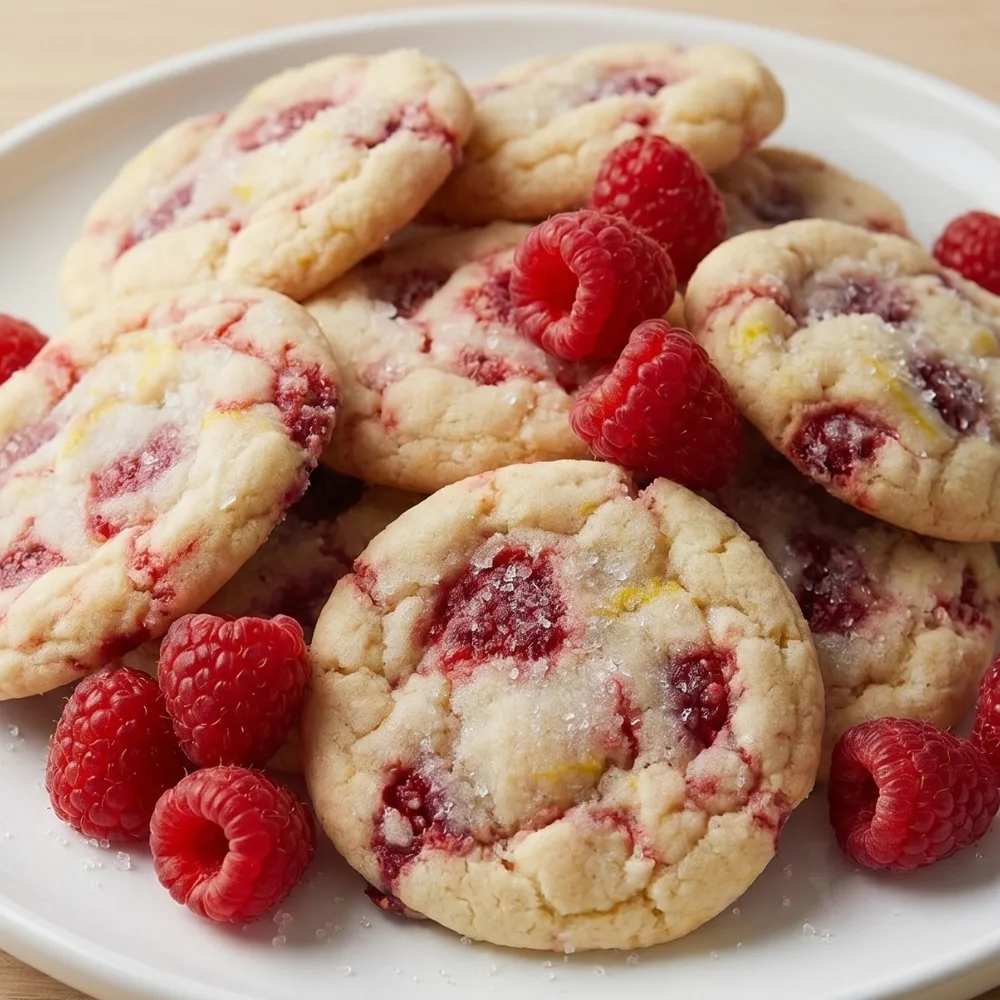
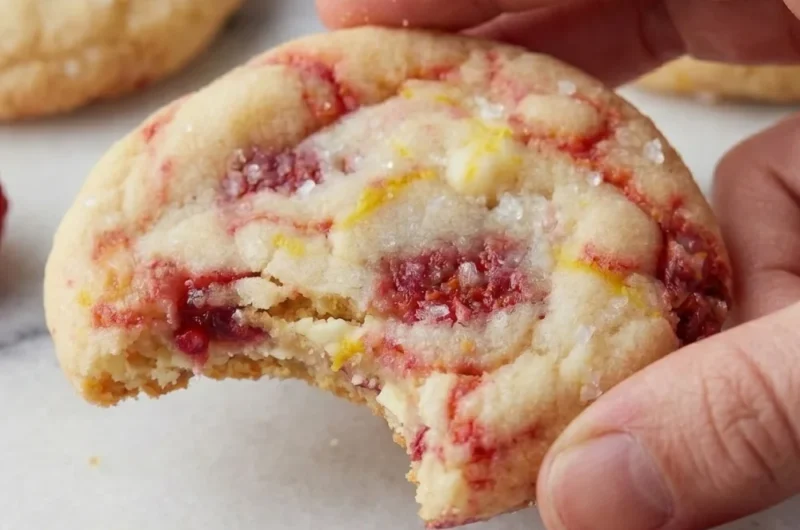
This careful method produces a treat that is remarkably soft on the inside, wonderfully chewy on the edges, and visually stunning. The visual contrast between the bright yellow dough and the deep pink berry swirls is absolutely gorgeous. Whether you are baking for a spring picnic, a baby shower, or simply craving a bright comforting treat on a rainy afternoon, this detailed guide delivers professional level results using straightforward pantry staples.
The Science of Lemon Sugar and The Infusion Method
If you have ever bitten into a citrus dessert and felt disappointed by a flat and artificial flavor that vaguely reminded you of cleaning supplies, you are certainly not alone. That disappointing flavor profile is the direct result of relying on imitation extracts and bottled flavorings. To achieve that gorgeous authentic bakery quality brightness, you absolutely have to extract and utilize the natural volatile oils trapped inside the microscopic pores of the lemon rind.
The single most transformative technique in this entire recipe, and a trick I swear by from my days as an ex chef, is creating infused lemon sugar. Long before you even touch your butter or flour, you will combine your freshly grated lemon zest directly with your granulated white sugar. Using your bare clean fingertips, you will firmly massage and rub the zest deeply into the sugar crystals for about sixty full seconds.
This physical friction actually bruises the zest, forcing the essential oils out of the rind and directly into the sugar. Because sugar attracts and holds onto moisture naturally, it traps those volatile oils perfectly. Within moments, your sugar will take on a pale beautiful yellow hue, and the texture will transform to feel remarkably like damp beach sand. The fragrance at this stage is absolutely incredible and acts as the foundation for the entire bake. It elevates the dough from a basic sweet treat into a gourmet experience.
The Secret Power of the Egg Yolk
If you look closely at our ingredients list, you will notice something quite unique. Rather than using a whole egg to bind our dough together, we are using a single egg yolk. This is a very specific and highly intentional choice rooted deep in pastry science, and it is the exact reason why these treats turn out so incredibly rich and satisfying.
A whole egg is composed of two entirely different components. The egg white is made mostly of water and structure building proteins. When you add egg whites to a dough, that excess water reacts with your flour to create a taller, cakier texture. While a cakey texture is wonderful for muffins or sponges, it is the exact opposite of what we want for a dense and chewy treat.
The egg yolk, on the other hand, is a concentrated source of pure fat and powerful natural emulsifiers. By omitting the watery egg white entirely and strictly using the yolk, we are adding an intense richness to the dough without introducing any extra hydration. This fat coats the flour proteins, preventing them from developing too much gluten. The result is a texture that mimics a dense fudgy brownie, yielding beautifully under your teeth with a incredibly soft melt in your mouth finish.
The Secret to Baking with Delicate Berries
Incorporating fruit into a dense dough can be incredibly tricky. The absolute biggest mistake home bakers make when attempting a fruit filled confection is using fresh berries at room temperature. Fresh raspberries have an incredibly high water content and very fragile cellular walls. When you attempt to fold them into a thick dough, they immediately crush and bleed their juices everywhere.
This excess moisture drastically alters the hydration levels of the flour, turning what should be a chewy treat into a soggy and unstructured muffin. Furthermore, the crushed berries will dye your entire batch of dough a murky gray color rather than keeping those beautiful distinct streaks of pink that make this recipe so visually appealing.
The solution is simple but completely non negotiable. You must use completely frozen raspberries, and you must chop them while they are still frozen solid. Freezing the fruit locks the cellular walls in place, turning them into solid little gems that can withstand the folding process. By chopping them into smaller pieces, you ensure that every single bite contains a pop of berry flavor without weighing down the structure of the dough. As they hit the hot oven, they slowly thaw and release their juices into small concentrated pockets, rather than flooding the entire baking pan.
When it is time to add them, you must employ a very gentle folding technique. Never use an electric mixer for this step. Use a flexible silicone spatula and gently scoop the dough from the bottom of the bowl over the berries. Two or three gentle folds are all you need. The less you manipulate the dough once the berries are introduced, the more beautiful your final bake will be.
The Magic of Flaked Sea Salt
While the combination of bright citrus and sweet berries is undeniably delicious on its own, adding a sprinkle of flaked sea salt to the tops of the dough right before baking elevates the entire flavor profile to a professional standard. In culinary terms, salt acts as a universal flavor enhancer. It works by actively suppressing the perception of bitterness on your tongue, which in turn amplifies your ability to taste sweetness and acidity.
When you take a bite, those large delicate flakes of sea salt hit your palate first. This initial savory spark immediately prepares your tastebuds for the rush of infused lemon sugar and tart raspberry juice that follows. It prevents the treat from becoming cloyingly sweet and adds a highly satisfying subtle crunch that contrasts beautifully with the soft and chewy center.
A Closer Look at the Ingredients You Need
A recipe is only as strong as its components. Let us break down the exact function of every ingredient so you understand exactly how this chewy masterpiece comes together.
- Fresh Lemons: You will utilize the entire fruit. We need the finely grated zest to infuse the sugar, and exactly one tablespoon of freshly squeezed juice to react with our leavening agents and brighten the dough.
- Frozen Raspberries: Do not thaw these. Keep them frozen solid and chop them into small pieces right before folding to prevent them from bleeding juice.
- Unsalted Butter: It must be softened to proper room temperature. The butter provides the fat necessary for a rich and tender crumb. Using unsalted butter allows us to control the exact sodium levels.
- Granulated Sugar and Brown Sugar: We use mostly white sugar to maintain the clean color of the dough. The small addition of brown sugar brings a touch of molasses which guarantees a soft texture that lasts for days.
- Egg Yolk: Must be at room temperature. The yolk acts as the crucial binder and adds dense fudgy richness without the excess water of an egg white.
- Pure Vanilla Extract: A splash of high quality vanilla extract acts as a flavor bridge, rounding out the sharp tart citrus notes.
- All Purpose Flour: The structural foundation. It is vital to measure correctly by lightly spooning the flour into your measuring cup and leveling it off with a knife.
- Baking Powder and Baking Soda: We utilize a dual leavening approach. The baking soda reacts instantly with the lemon juice for a quick rise, while the baking powder activates with the heat of the oven to sustain that lift.
- Flaked Sea Salt: A finishing touch that balances the sweetness and elevates the citrus notes.
The Mixing and Baking Process Explained
With our science understood, the actual mixing process is remarkably straightforward. Follow these instructions carefully for a beautiful result every single time.
- Step 1The Infusion and Creaming Stage
After you have infused your lemon sugar using your fingertips, add your properly softened butter and your brown sugar. Using an electric hand mixer or a stand mixer fitted with the paddle attachment, beat the mixture on a medium high speed for a full three to four minutes. This extended creaming process forces air into the butter. The mixture should transform, becoming incredibly light, fluffy, and visibly paler in color.
- Step 2Incorporating the Emulsifiers and Flavorings
Use a flexible silicone spatula to scrape down the sides and the bottom of your mixing bowl, ensuring no dense butter is hiding unmixed. Add your room temperature egg yolk, the freshly squeezed lemon juice, and pure vanilla extract. Beat on a medium speed just until everything is completely emulsified. Because of the high acid content in the lemon juice, the batter may briefly look slightly curdled. Do not panic, as this is a normal reaction and it will smooth out flawlessly once the dry ingredients are introduced.
- Step 3Managing Gluten Development
In a separate medium bowl, use a wire whisk to thoroughly combine your flour, salt, baking powder, and baking soda. Whisking ensures the leavening agents are evenly distributed. Pour this dry mixture into your wet ingredients. Turn your mixer to the lowest possible setting and mix just until the last streaks of white flour disappear. Overmixing at this stage will overwork the gluten strands in the flour, resulting in a tough and bread like texture rather than a tender dessert.
- Step 4The Final Addition and Chilling
Take your frozen raspberries directly out of the freezer and roughly chop them. Using a spatula, very gently fold them into the dough. Only fold two or three times to distribute them evenly, taking care not to crush the fruit. Cover your mixing bowl tightly with plastic wrap and place it into the refrigerator for thirty minutes. This chill step solidifies the butter and allows the flour to fully hydrate, which prevents the dough from spreading too thin in the hot oven.
- Step 5Rolling and Baking
Preheat your oven and line your heavy bottomed baking sheets with high quality parchment paper. Using a standard cookie scoop, portion the chilled dough and roll it lightly between your palms into smooth balls. Place the dough balls onto your prepared baking sheets leaving at least two inches of space between each. Sprinkle the tops generously with flaked sea salt. Bake on the middle rack until the edges appear set and very slightly golden, while the centers remain pale and soft. Remove from the oven and allow them to cool and firm up on the hot baking sheet for five minutes before transferring them to a wire cooling rack.
Variations Pairings and Storage Ideas
A truly spectacular dessert table offers a journey of contrasting flavors and textures. If you are hosting an event and want to balance the bright tart notes of these citrus berry treats, I highly recommend pairing them with rich deeply comforting options. They look and taste fantastic served alongside our comforting chewy date cookies recipe or a towering stack of our classic bakery style chocolate chip cookies recipe.
If you are curating a platter of nostalgic comfort bakes, nestle these bright treats next to our classic almond cherry cookies recipe. For a stunning citrus themed dessert spread, you can absolutely pair them with our soft lemon cookies recipe for double the brightness and joy.
How to Store and Freeze for Later
Because this dough contains fresh fruit and a generous amount of butter, these treats retain their moisture remarkably well. Store your fully cooled baked goods in an airtight container at room temperature. They will remain wonderfully soft and chewy for up to five days.
As an ex chef, I always keep raw dough in my freezer for unexpected guests or sudden cravings. You can scoop the dough balls, arrange them on a baking sheet, and freeze them solid. Once firm, transfer them to a heavy duty freezer bag for up to three months. You can bake them directly from frozen. Simply add an extra one to two minutes to your standard baking time.
Frequently Asked Questions
Fresh Springtime Lemon Raspberry Cookies Recipe
Course: DessertsCuisine: American14
Cookies15
minutes12
minutes27
minutesThis soft lemon raspberry cookies recipe uses fresh citrus and chopped frozen berries to create a comforting dessert with wonderfully chewy edges and a beautiful finish of flaked sea salt.
Ingredients
1/2 cup or 100g Granulated sugar
1 large Lemon zested
1/2 cup or 113.5g Unsalted butter softened to room temperature
1/4 cup or 55g Brown sugar
1 large Egg yolk
1 tablespoon Lemon juice about half a lemon
1 teaspoon Vanilla extract
1/2 teaspoon Salt
1/2 teaspoon Baking powder
1/4 teaspoon Baking soda
1 and 1/4 cups or 175g All purpose flour
3/4 cup or 75g Frozen raspberries chopped small
Flaked sea salt for sprinkling on top
Directions
- In a large mixing bowl, use your fingertips to rub the fresh lemon zest directly into the 1 cup of granulated sugar for about 1 minute, until it resembles damp sand and is highly fragrant.
- Add the softened unsalted butter to the lemon sugar. Beat on medium high speed for 3 to 4 minutes until light and fluffy.
- Add the room temperature egg, fresh lemon juice, and pure vanilla extract. Mix on medium speed until smooth and combined.
- In a separate bowl, whisk together the all purpose flour, baking powder, baking soda, and salt.
- Gently fold the dry mixture into the wet ingredients just until the white flour streaks completely disappear.
- Cover the bowl and chill the dough in the refrigerator for 1 hour.
- Preheat your oven to 350°F (175°C) and line two baking sheets with parchment paper.
- Scoop 1 tablespoon sized portions of the chilled dough and roll them into smooth balls. Roll each dough ball generously in the extra 1/4 cup of granulated sugar.
- Place the coated dough balls on the prepared baking sheets, 2 inches apart. Bake for 11 to 13 minutes until the edges are set but the centers remain soft. Let cool on the pan for 5 minutes before moving to a wire rack.
Notes
- The Sugar Infusion: Do not skip rubbing the lemon zest into the sugar. This technique releases the natural oils and is the secret to a bright bakery style flavor without using artificial extracts.
- Frozen Berries Only: Always use frozen raspberries and chop them quickly while they are solid. Fresh berries will release too much moisture and crush easily turning your dough completely soggy.
- The Gentle Fold: When mixing in your frozen fruit always use a silicone spatula instead of a hand mixer. Folding gently ensures your dough stays a beautiful pale yellow with distinct pops of pink berry.