How to Make Cottage Cheese Cheesecake1h5min
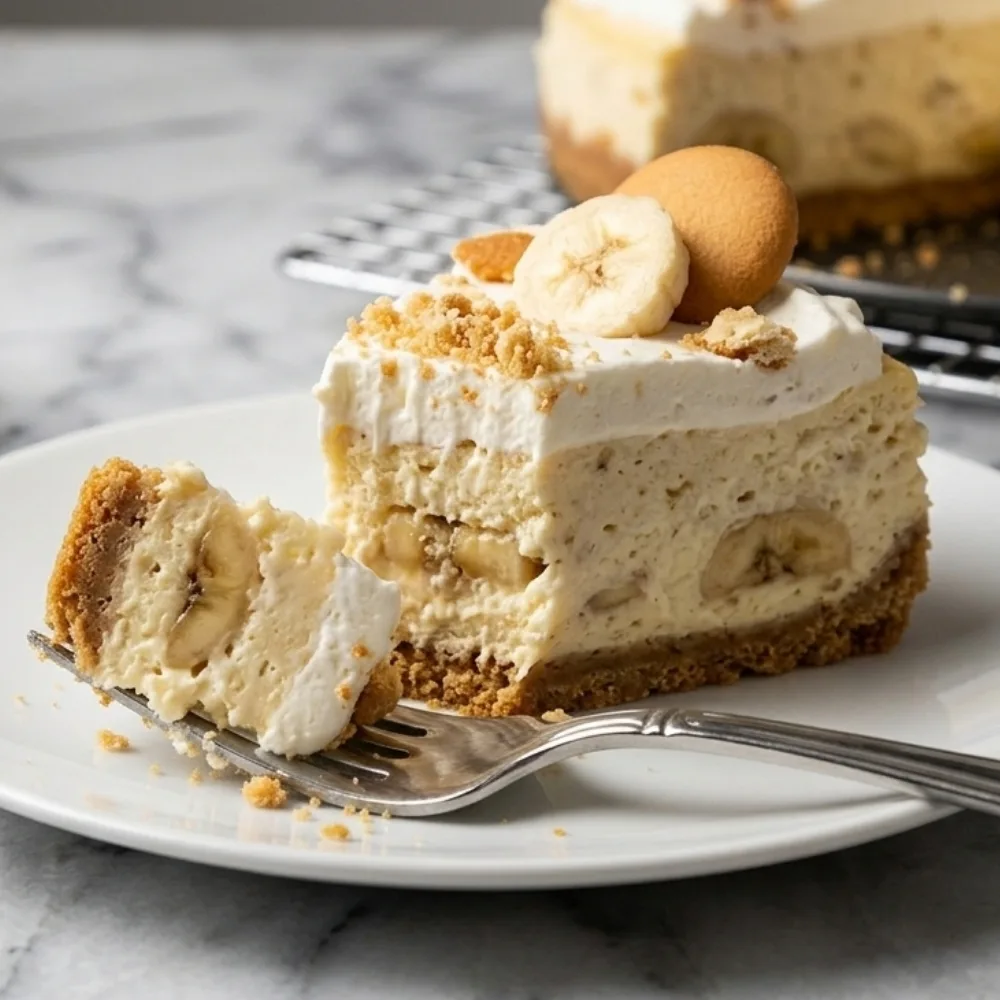
Imagine a crisp, golden biscuit base carrying a remarkably light, sweet vanilla baked custard that feels incredibly decadent while remaining packed with clean dairy proteins. It offers a sophisticated, modern update to your regular baking rotation.
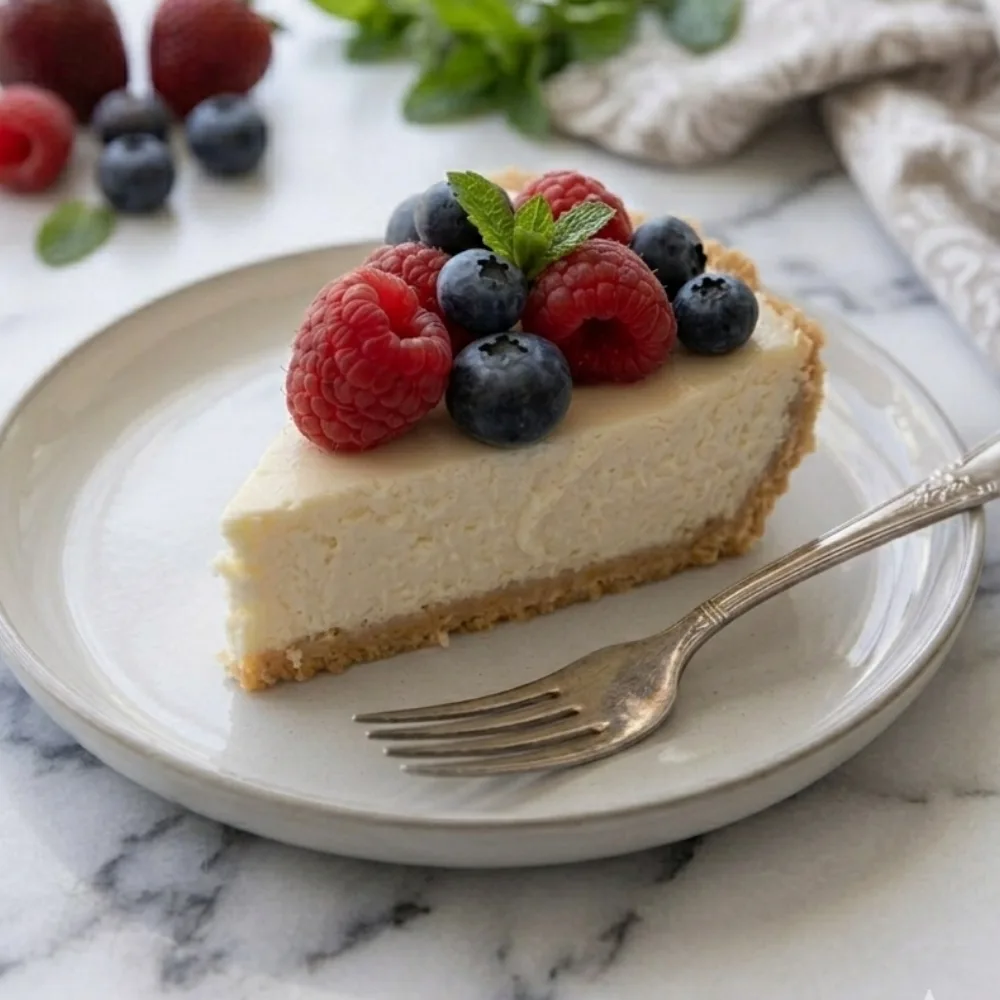
Discover how to make perfect cottage cheese cheesecake using a precise baking method that transforms small-curd dairy into a silky, high-protein dessert.
When you learn how to make this recipe, you unlock a healthier way to enjoy a classic baked custard slice every single time.
The Structural Differences of This Cottage Cheese Cheesecake
Home pastry chefs often ask how to stabilize a dairy base with high moisture levels. Nobody wants a grainy or weeping texture.
Unlike executing an eggless, cold-set no bake oreo cheesecake recipe or setting up a tropical fruit gel layer like our creamy mango cheesecake recipe, this baked cottage cheese cheesecake variant utilizes hot thermal crystallization.
The structural backbone relies on egg coagulation. It works in unison with a tiny amount of starch to bind free whey lipids permanently.
By blending full-fat small curds to a smooth fluid, you uncoil the dense casein structures. This gives them the ability to trap sugars and liquid uniformly when heated.
The resulting cottage cheese cheesecake delivers a beautiful crumb density. It holds its shape perfectly on a dessert plate while maintaining a light mouthfeel.
The Crucial De-Wheying Rule for This High-Protein Dessert
The defining feature of a successful high-protein bake is managing final moisture. This ensures the crust doesn’t turn soggy or separate from the filling.
When mastering how to make perfect cottage cheese cheesecake, achieving this balance requires close attention to the raw state of your dairy components.
Ingredients for Your Cultured Custard Base (8 Servings)
This system balances clean dairy proteins with precise binding starches. It simulates the exact depth of old-school heavy pastry blocks for your cottage cheese cheesecake.
- Cottage Cheese: 2 cups/approx. 450g full-fat (4%) small curd cottage cheese.
- Eggs: 2 large, room-temperature eggs to bind the structure.
- Sugar: 1/2 cup/approx. 100g of granulated sugar.
- Cornstarch: 2 tablespoons to bind free fluids.
- Vanilla & Lemon: 3/4 teaspoon pure vanilla extract and 3/4 teaspoon fresh lemon juice.
- Crust Base: 1 cup fine crumbs mixed with 3 tablespoons melted unsalted butter.
Technical Steps on How to Make Perfect Cottage Cheese Cheesecake
- Step 1Bake the Crumb Base
Combine crumbs and butter until they resemble wet sand. Press firmly into an 8-inch or 9-inch springform pan. Bake at 350°F (175°C) for 8 minutes. Let it cool completely.
- Step 2Emulsify the Dairy Body
Place the cottage cheese, sugar, cornstarch, vanilla, and lemon juice into a high-powered blender. Process on high for 60 to 90 seconds until glossy and free of lumps.
- Step 3Incorporate Eggs and Level the Pan Core
Add your room-temperature eggs to the base. Pulse gently for just 5 seconds until incorporated. Avoid over-mixing to prevent trapping excess air.
Managing curd structure breakdown is a technical necessity for a flawless cottage cheese cheesecake. This recipe trades heavy brick cheese for cultured curds, so your success relies on mechanical blending.
High-speed blades crush casein clumps. This forces them to bond with the liquid whey. Hand-whisking will leave millions of grains intact, resulting in an unpleasant, scrambled-egg texture.
The binding starches and eggs require a light touch. Cornstarch acts as a thermal stabilizer. As the cake heats, it absorbs free moisture and forms a steady gel.
When you add eggs, use the lowest pulse speed. Excessive air trapped in the raw custard will expand like a giant soufflé. This causes the protein chains to tear and fractures the cake surface.
Prepping your pan with heavy parchment paper is essential. It allows you to detach the baked sides smoothly. Bake at a steady 325°F (160°C) to prevent the borders from drying out.
Cooling inside the turned-off oven is the secret to a stable center. The residual warmth allows proteins to set gently without the shock of cold air, which causes rapid sinking.
For professional slices, use a hot, dry chef’s knife. Reheat and wipe the blade between every cut. This keeps the interior clean and beautiful.
If you prefer a different texture, try our strawberry pretzel dessert recipe for a crunchy, no-bake alternative.
- Step 4Chill and Serve
Pour into your prepared pan. Bake at 325°F (160°C) for 45 to 50 minutes. The edges should be stable, but the center should jiggle slightly. Cool inside the oven for one hour, then refrigerate for 4 hours.
Troubleshooting Your Baked Custard
This means you under-blended. You must process until the cottage cheese looks exactly like smooth heavy cream before adding the eggs.
You likely whipped in too much air or moved the cake to a cold room too fast. Keep egg mixing to a minimum and never skip the oven-cooling phase.
How to Make Cottage Cheese Cheesecake
Course: DessertsCuisine: American8
Slices15
minutes50
minutes1
hour5
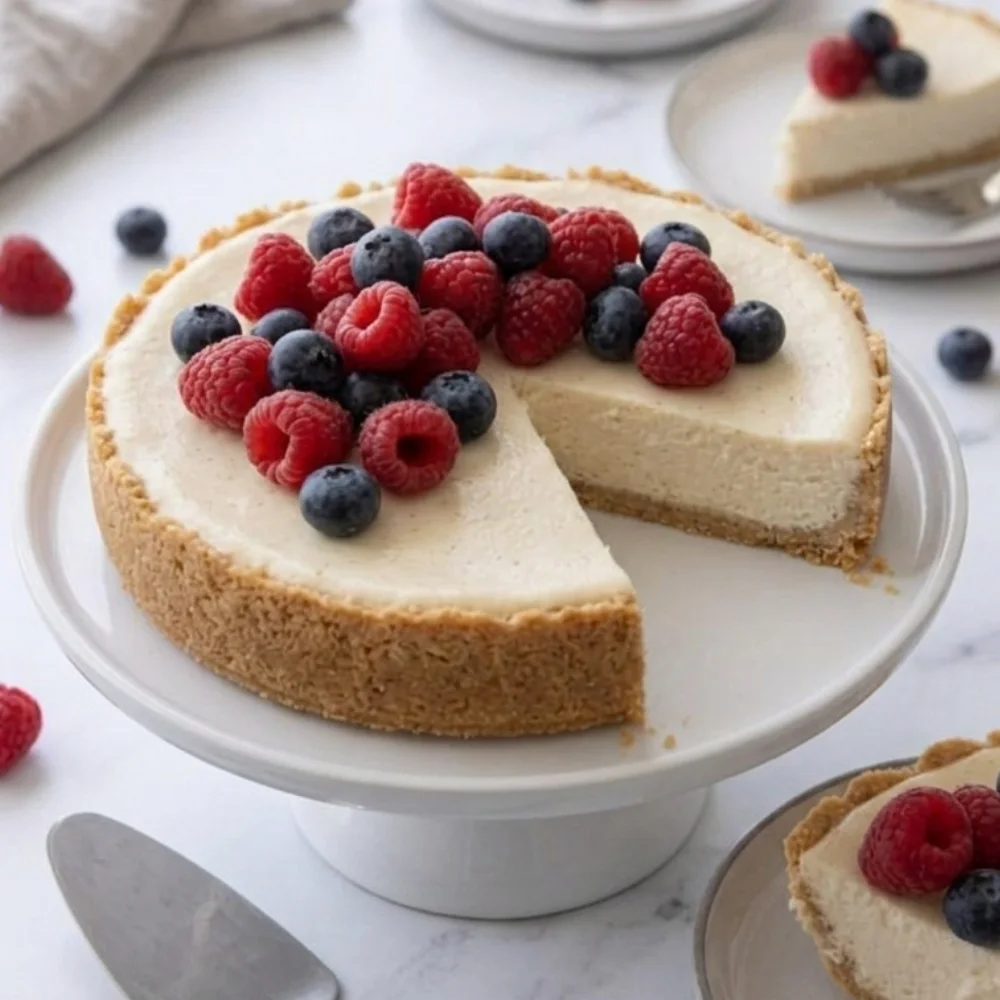
minutesThis modern cottage cheese cheesecake recipe blends cultured dairy curds into a silky, high-protein vanilla baked custard resting over a crisp cracker crust.
Ingredients
1 1/2 cups graham cracker crumbs
4 tablespoons unsalted butter, melted
3 cups (approx. 680g) full-fat (4%) small curd cottage cheese
3/4 cup (approx. 150g) granulated sugar
3 tablespoons cornstarch
1 teaspoon pure vanilla extract
1 teaspoon fresh lemon juice
3 large eggs, room temperature
Directions
- Preheat your oven to 350°F (175°C). Line the bottom of a 9-inch springform pan with parchment paper.
- In a small bowl, combine the graham cracker crumbs and melted unsalted butter until uniformly moistened. Press firmly into the bottom of the pan and bake for 8 minutes. Remove and cool completely.
- Lower the oven temperature to 325°F (160°C).
- In a high-powered blender or food processor, combine the cottage cheese, granulated sugar, cornstarch, vanilla extract, and fresh lemon juice.
- Process on high speed for 60 to 90 seconds, stopping once to scrape down the sides, until the batter is completely glossy and smooth.
- Crack in the room-temperature eggs. Pulse the blender on low speed 3 to 4 times just until the eggs disappear into the batter. Do not over-blend.
- Pour the smooth mixture carefully over the cooled cracker base, smoothing the top surface with a spatula.
- Bake at 325°F (160°C) for 45 to 50 minutes. The outer edges should look firm and slightly puffed, while the exact center should still jiggle slightly.
- Turn off the oven and crack the oven door open about 4 inches. Let the cheesecake cool inside the oven undisturbed for 1 hour.
- Remove the pan and place it on a wire rack to reach room temperature, then transfer to the refrigerator to chill for at least 4 hours before slicing.
Notes
- Dairy Selection: Avoid using fat-free or dry-curd cottage cheese varieties, as they lack the necessary fat levels to build a smooth, creamy emulsion, resulting in a rubbery bake.
Blending Power: A standard food mixer or hand whisk is insufficient to smooth out the curds. A blender or processor is highly mandatory.